
Business Insurance • Commercial Property
Commercial Property Insurance: Protect Your Building, Equipment & Inventory
Your storefront, equipment, or warehouse is not just real estate — it’s revenue and reputation. Commercial property insurance covers physical damage and the costs that come with recovery so your business survives the unexpected.
Read Practical Coverage Steps →
In this first part, I’ll cover the basics you actually need to decide: what commercial property insurance covers, the common gaps small businesses miss, how carriers set prices, and quick actions you can take this week to reduce risk. I write this from the point of view of a business owner — practical, no-nonsense, and focused on U.S. readers.
What commercial property insurance actually covers
At its core, commercial property insurance reimburses you when your business property is damaged or destroyed by covered perils. That usually includes fire, lightning, windstorm, vandalism, and theft. A typical policy will address:
- Building coverage: physical structure you own.
- Business personal property: equipment, inventory, furniture, and fixtures.
- Loss of income / business interruption: optional or included coverage that replaces revenue while you rebuild (we’ll deep-dive into this in Part 2).
- Extra expense: immediate costs to keep operating (temporary location, emergency repairs).
Who needs it — and how it differs from homeowners or landlord policies
If you use property to run a business — retail shop, office, café, warehouse — you need a commercial policy. Personal homeowners or landlord policies often exclude business exposures or limit coverage for business property stored on the premises. Don’t assume your personal policy will rescue you after a loss — it usually won’t.
How carriers determine your premium
Underwriters price commercial property risk by looking at several practical factors:
- Construction type: brick/steel vs wood frame matters for fire resistance.
- Fire protection: proximity to fire department, hydrants, and sprinkler systems.
- Location & crime statistics: high-theft or flood-prone areas raise rates.
- Occupancy & use: restaurants with grease risks differ from office occupancy.
- Replacement cost vs actual cash value: replacement cost pays to rebuild; ACV deducts depreciation.
Common coverage gaps small businesses miss
Some overlooked gaps often cost owners later:
- Flood and earthquake: usually excluded; need separate policies or NFIP for flood.
- Business interruption limits: insufficient indemnity periods that don’t match rebuild time.
- Ordinance or law: costs to rebuild to current code after an older building is damaged.
- Off-premises property & transit: your inventory in a contractor’s van or at a trade show may not be covered.

Real claim examples to make it real
Two short, practical examples that show why coverage matters:
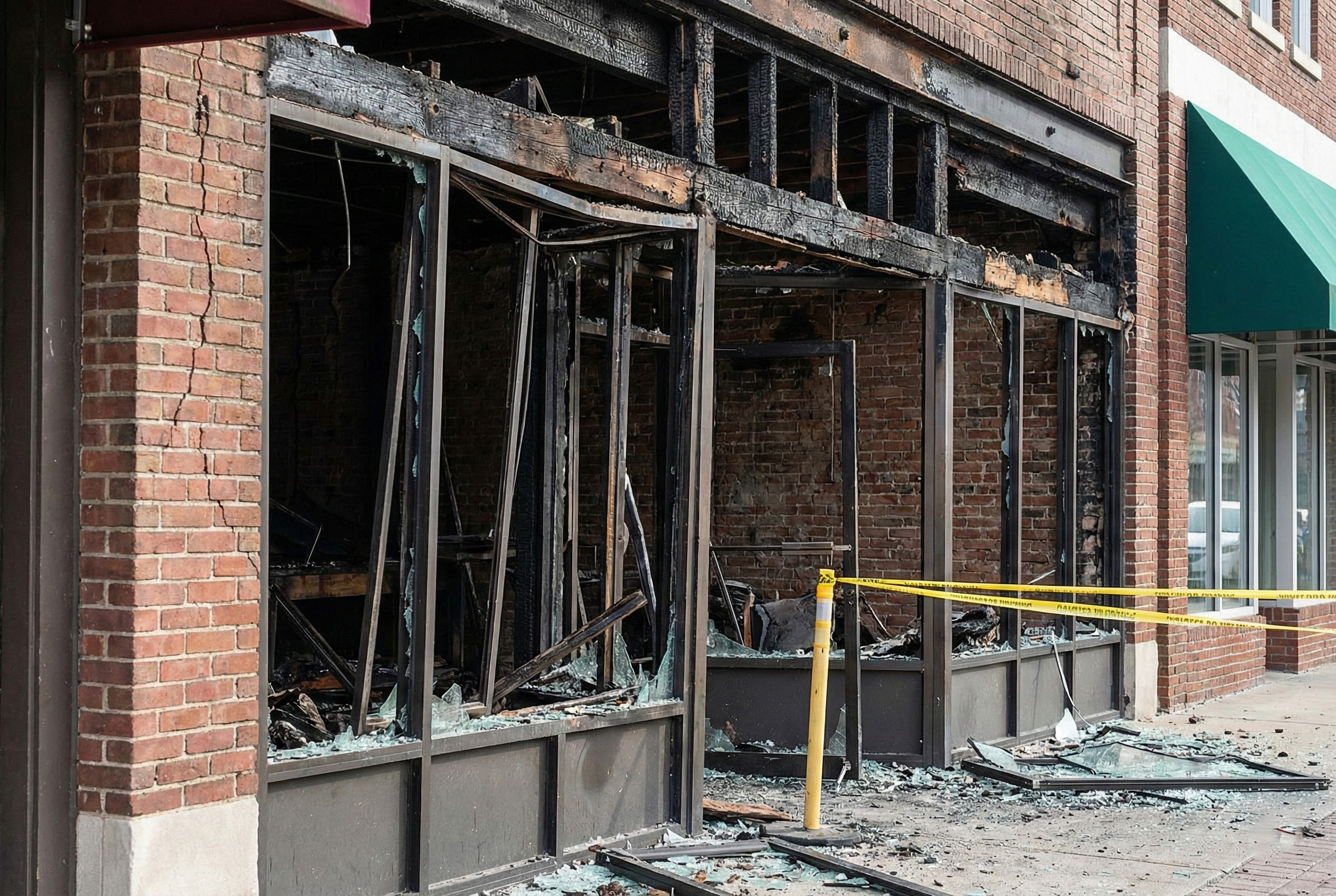
- Fire at a boutique: A small retail shop had a localized electrical fire that damaged stock and required three weeks of closure. The property policy covered repairs and the business interruption coverage replaced lost revenue so payroll stayed intact.
- Storm damage to a warehouse: A distribution warehouse lost part of its roof during a storm. Cargo inside was water-damaged. Proper building and inventory coverage allowed the business to repair the roof and recover inventory losses without a cash crisis.
Immediate steps you can take this week
You don’t need to wait for renewal to reduce risk. Do these now:
- Document and photograph inventory, equipment, and the building interior/exterior.
- Confirm sprinkler and fire alarm certification — get maintenance receipts on file.
- Check whether flood or earthquake exclusions apply to your policy and get quotes if needed.
- Run a short business interruption estimate: how many weeks of revenue would you need to survive a closure?
Quick checklist before you shop for quotes
- Do you have accurate replacement-cost values for building & contents?
- Are your inventories and equipment lists current and photographed?
- Do you need ordinance or business interruption coverage?
- Do you operate in a high-risk zone (flood, wildfire, earthquake)?
- Have you asked for multi-policy discounts if bundling with general liability or commercial auto?
The hidden risks most business owners don’t discover until a claim
I’ve noticed something after reviewing dozens of commercial property insurance stories from U.S. small-business owners: the biggest financial surprises don’t come from premiums — they come from gaps people didn’t even know existed. If you’ve ever assumed your building or inventory is “covered,” Part 2 will help you see the blind spots that lead to denied claims or long delays.
Before we dive deeper, think of your commercial property insurance as two parts: (1) coverage for the physical damage you can see, and (2) coverage for the financial damage you feel afterward — lost income, relocation, code upgrades, supply delays, and more. Most owners only evaluate the first part, but the second part is where businesses either recover or collapse.
Why replacement-cost valuation matters more than you think
Many business owners underinsure their building or equipment without realizing it. If you bought a property ten years ago for $300,000, rebuilding it today may cost $500,000 or more. Underwriters call this the “insurance-to-value ratio,” and if your coverage is too low, your claim may be reduced using the coinsurance penalty — even for partial losses.
Here’s the simplest guideline: always insure commercial property at current replacement cost—not market value. Replacement cost reflects the true cost of materials, labor, and code upgrades in 2025 and beyond.
This is also why insurers regularly adjust commercial rates nationwide. Inflation, supply chain issues, and skilled labor shortages mean rebuilding expenses can fluctuate quickly. A strong replacement-cost endorsement protects you from absorbing those increases out of pocket.
Why business interruption insurance is just as important as building coverage
Imagine your retail store or café suffers a fire. The building is rebuilt in four months, but what happens to your income during those months? Payroll? Rent? Vendor contracts?
This is where business interruption (BI) insurance becomes essential. It helps replace lost net income and ongoing expenses when your business can’t operate due to a covered event.
- Actual loss sustained: pays based on real documented loss, not an arbitrary limit.
- Indemnity period: length of time BI will pay (often 12 months, but may need 18–24 for rebuilds).
- Extended business income: covers the ramp-up period after reopening when revenue is still recovering.
I’ve seen many businesses reopen after a disaster but fail within six months because they didn’t have BI coverage to survive the downtime. Your physical property might be restored — but your customer flow may take far longer to return.
Code upgrades, ordinance, and law: the coverage most owners learn about too late
If your building is older, a disaster often triggers mandatory code upgrades. Whether it’s electrical rewiring, ADA accessibility, fire suppression rules, or structural changes, these upgrades aren’t optional — and can cost tens of thousands of dollars.
Standard policies usually exclude these expenses unless you add Ordinance or Law coverage. That endorsement has three main parts:
- Coverage A: Undamaged portion of the building that must be demolished.
- Coverage B: Demolition costs.
- Coverage C: Increased cost to rebuild to current code.
Without this endorsement, a rebuild project can stall instantly — not due to the initial damage, but the required upgrades your policy didn’t anticipate.
Equipment breakdown: one of the most misunderstood coverages
“I don’t need this. My equipment is new.” That’s the most common misconception. Equipment breakdown protects you from failures not caused by fire or weather — things your standard property policy may not cover.
This includes:
- Mechanical or electrical failure of HVAC systems
- Power surge damage to electronics
- Boiler or pressure system breakdown
- Production machinery malfunctions
If your entire point-of-sale network fries during a surge, equipment breakdown coverage can be the difference between returning to business tomorrow or dealing with an expensive, uninsured loss.
Inventory, seasonal increases & the problem of fluctuating stock levels
If your business carries fluctuating inventory — like a gift shop, electronics store, or seasonal retailer — you may need a peak season endorsement. It automatically increases coverage during your busiest months.
Otherwise, a major claim during peak sales volume can leave you underinsured. For example: A $150,000 limit may work nine months a year, but not during Q4 holiday inventory levels of $250,000.
Off-premises property, contractors, and mobile equipment
Do you store materials in a vehicle? Move tools between locations? Standard commercial property policies often exclude or severely limit property away from the main premises.
You may need endorsements for:
- Property in transit
- Tools & equipment off premises
- Property at temporary locations
Contractors, landscapers, photographers, mobile repair techs — nearly all need this upgrade.

How to prepare a claim before a loss ever happens
This is one of the most valuable habits you can develop as a business owner:
- Create a digital inventory folder with photos, serial numbers, and receipts.
- Record a walkthrough video of your building and equipment once a year.
- Scan and upload maintenance records for HVAC, roofing, and electrical systems.
- Store everything in two places — cloud storage + a USB drive in a fire-resistant safe.
When a claim happens, this documentation cuts disputes dramatically and speeds up payments. Insurance adjusters love clarity — give them what they need before they ask.
Flood & earthquake coverage: what business owners misunderstand
Commercial property insurance almost never includes flood or earthquake damage. Flood requires NFIP or private flood insurance. Earthquake requires a separate endorsement or stand-alone policy.
If your business relies on equipment or inventory, a single flood can wipe out goods in minutes. Many business owners don’t realize even small water intrusions aren’t covered unless the cause matches a covered peril.
Final checklist before choosing a policy
- Accurate replacement cost valuations
- Business interruption with correct indemnity period
- Ordinance or Law Coverage A/B/C
- Equipment breakdown add-on
- Peak season or fluctuating inventory coverage
- Off-premises equipment protection
- Deductible strategy that balances cost and risk
Commercial property insurance isn’t just about protecting a building — it’s about protecting the future your business is working toward. When you choose the right limits, endorsements, and documentation habits, you’re not just covering risk… you’re buying stability, confidence, and time during a crisis.
Conclusion
Your business is more than walls, equipment, and inventory — it’s a living system built on people, processes, reputation, and revenue. Commercial property insurance protects every piece of that system when disaster hits. With the right endorsements, accurate valuations, and good documentation, you put your business in the strongest possible position to survive and rebuild with confidence.
Disclaimer: Insurance policies vary widely by state and provider. Coverage examples listed here may differ from your policy. Always review your declarations page and endorsements.
Last updated: December 2025